Eczema Treatment In Bangalore

What is eczema?

Eczema is a skin condition where red and itchy patches appear over the affected areas. In some types of eczema, the skin remains dry and scaly, and some eczema do get infected and may appear oozy. The word “eczema” is often used to describe atopic dermatitis, which is the most common type of eczema. 

MAKE APPOINTMENT
Eczema Treatment In Bangalore
What causes eczema?

What causes eczema?

The exact cause of eczema is not known, however, there is an exaggerated immune response to an irritant. This irritant could be external (hand eczema due to detergent) or internal (atopic eczema). In most eczemas, the loss of the barrier function of the skin by loss of moisture in the skin is also a common factor. 

Are there many types of eczema?

Eczema is a group of disorders that are often described together as their symptoms are similar. Atopic dermatitis, which is the most common type of eczema is the prototype. However, hand eczema, stasis dermatitis, contact dermatitis, and dyshidrotic eczema are some other types. It is important to diagnose the type of eczema as this will help to give the correct advice regarding prognosis. For example, hand eczema and contact dermatitis can be completely healed if the irritant can be identified and avoided.

What does eczema look like?

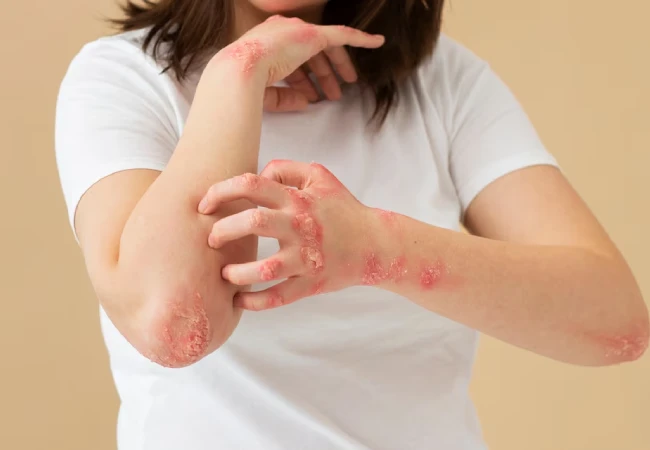
Eczema appears as dry skin with red and itchy patches. It may be localized or it may be generalized. Though eczema is dry, when secondarily infected with bacteria, then they may appear to be oozy. 

How is eczema treated?

  • The first step to treating eczema is to get to the diagnosis of eczema. This is achieved by a combination of history, examination, and patch testing. Pus cultures and swabs are needed to treat wet eczema. 
  • The lifestyle changes which help eczema recover is to restore the lost barrier function of the skin. These include avoidance of harsh gel-based soaps or body washes and frequent reapplication of a ceramide containing moisturizer. 
  • Medical treatments such as topical steroids and oral antihistamines for the basis for the treatment. Oral antibiotics are often added on if a secondary infection is suspected. Oral immunosuppressants are reserved for very severe forms of eczema resistant to topical treatment. 

What foods have to be avoided for the treatment of eczema?

Rarely, eczema can be triggered by certain foods. If the eczema is recurrent, and not responding to traditional treatments, your dermatologist may ask you to avoid certain foods. These may include foods with artificial flavoring agents, eggs, milk, and dairy products, nuts, and gluten-containing foods. 

What are the lifestyle changes which are helpful in the reduction of eczema?

The lifestyle changes which help eczema recover is to restore the lost barrier function of the skin. These include avoidance of harsh gel-based soaps or body washes and frequent reapplication of a ceramide containing moisturizer. Eating foods rich in omega 3 fatty acids and ceramides help to keep the skin healthy. Walnuts, flax seeds, avocado, fish, and almonds help in restoring some of the skin’s natural barriers. 

Book An Appointment

What Happens After You Book

01 Receive a Personal Call Back Receive a Personal Call Back
02 Seamless Appointment Scheduling Seamless Appointment Scheduling
03 Expert Dermatology Consultation Expert Dermatology Consultation
04 Bespoke Treatment Plan Bespoke Treatment Plan
05 Advanced In-Clinic Care Advanced In-Clinic Care
06 Aftercare and Ongoing Support Aftercare and Ongoing Support

Our Testimonials

Dr. Rasya Dixit, Medical Director, is a trusted clinical and cosmetic dermatologist from Bangalore, with more than 10 years of experience and expertise in her field.

SOCIAL CONNECTION
Reach Us At:
ADDRESS :

32, 1st Floor, 1st Main Cross, above
HDFC Bank, 1st Block Koramangala,
Koramangala, Bengaluru, Karnataka
560034.

Bottom to Top